


From siding and roofs to driveways, windows, gutters, and holiday lights — every service uses the gentle, lasting soft-wash approach your home deserves.
01 — House Washing
A gentle soft wash that lifts mildew, pollen, and grime without ever touching your siding with high pressure.
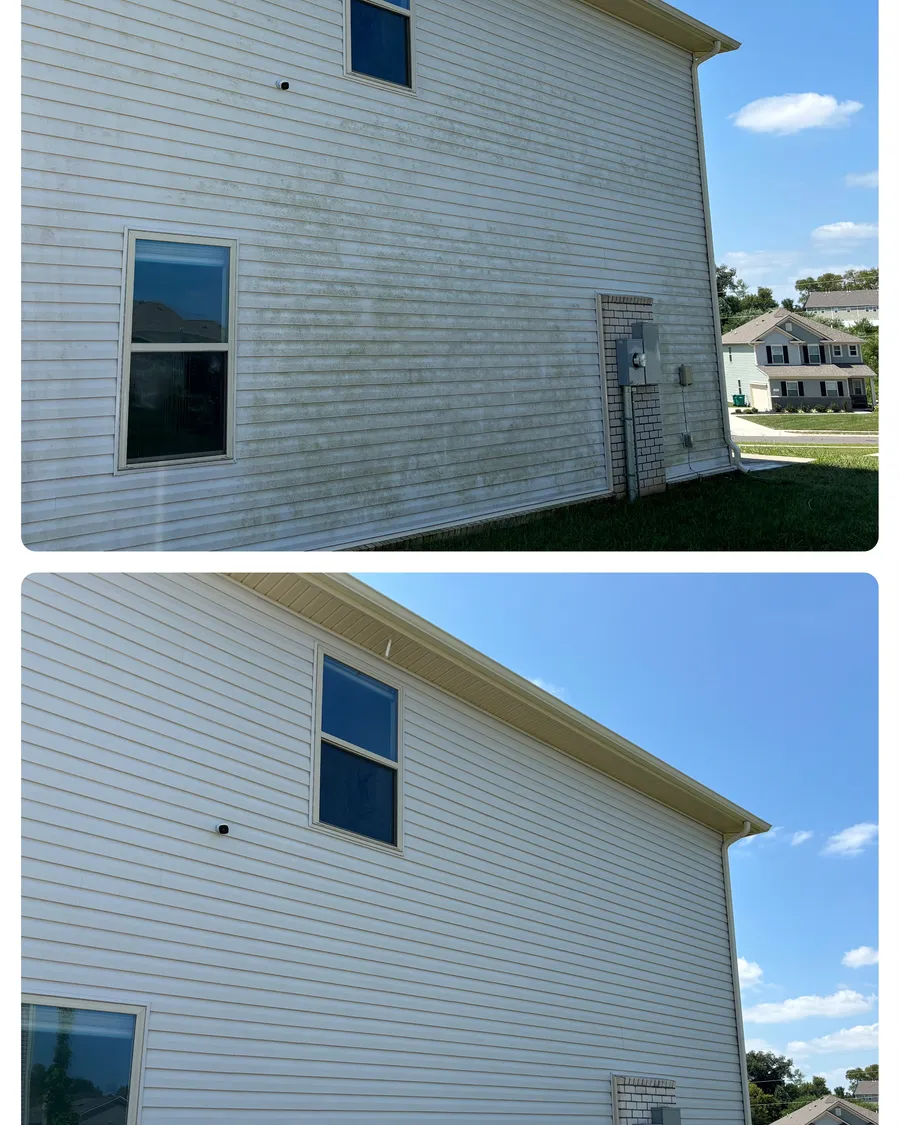
Middle Tennessee humidity feeds mildew and algae on siding fast, especially on the shaded, north-facing side of the house. We soft wash — not pressure wash — using low pressure under about 500 PSI paired with the right cleaning solution for your surface, so growth is killed at the root instead of just rinsed off the top.
A biodegradable detergent breaks down mildew and algae at the root, so the result lasts noticeably longer than a quick high-pressure rinse.
Running roughly 60–150 PSI protects paint and caulking instead of driving water behind panels or stripping finish.
From established brick in older neighborhoods to Hardie board on newer builds, soft washing is gentle enough for all of Williamson County's common exterior materials.
The plan
Walk the property and identify problem areas and anything that needs protecting
Pre-wet and protect landscaping, then apply the soft wash solution
Let it dwell so the detergent kills mildew and algae at the root
Gentle, controlled rinse — never high pressure on siding
Final walkthrough before we call it done
FAQ
Yes — it's the safer method. High-pressure washing can force water behind vinyl panels and damage the substrate; soft washing uses low pressure and lets the cleaning solution do the work.
For most Williamson County homes, an annual house wash is a good rhythm, ideally in late spring after the heavy pollen season subsides in late April or May. Homes with dense tree cover or persistent mildew on shaded, north-facing walls may benefit from washing more than once a year.
We take that seriously and build plant protection into the job — pre-wetting landscaping, tarping where needed, using biodegradable and neutralized solutions, and rinsing thoroughly when we're done.
Middle Tennessee's warm, humid air feeds mildew and algae, and north-facing or tree-shaded walls stay damp and shaded longest, so they bloom first and worst. A quick high-pressure rinse only knocks the surface off; soft washing with the right detergent kills the growth at the root, which is why a proper wash stays clean noticeably longer.
02 — Roof Washing
Low-pressure treatment that kills the algae behind black streaks and adds years to your shingles.
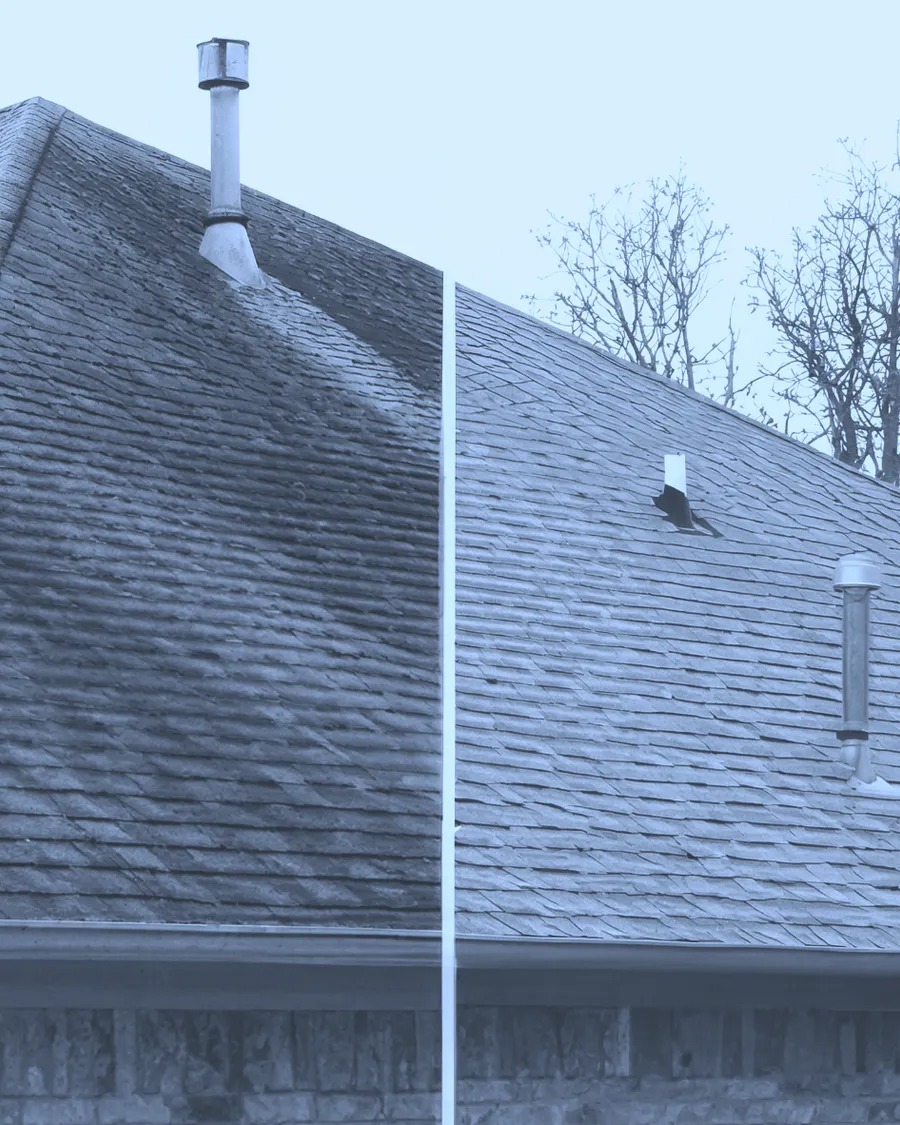
Those dark vertical streaks running down the north-facing side of a Franklin roof aren't dirt, and they won't rinse off in the rain. That's Gloeocapsa magma — a cyanobacteria that feeds on the limestone filler in shingles and builds a dark, UV-protective coating gravity pulls into streaks. We clean roofs the way shingle manufacturers and roofing associations actually recommend: soft washing, with low pressure and the correct cleaning solution — never a pressure washer on shingles.
The treatment kills Gloeocapsa magma at the root, and results typically last 2–5 years — far longer than a surface rinse.
High pressure strips the protective granule layer and can void manufacturer warranties. We never use it on a roof.
Soft washing is the shingle-safe method — it preserves the UV and weather protection your roof depends on.
The plan
Walk the roof plan and protect surrounding property and landscaping
Apply the low-pressure soft wash solution and let it dwell
Controlled rinse, with plants rinsed afterward
Final walkthrough with care timeline guidance
FAQ
Pressure washing can void most shingle manufacturer warranties. Soft washing at low pressure with a roof-safe solution is the method most manufacturers actually recommend.
The black streaks on asphalt shingle roofs are Gloeocapsa magma, a cyanobacteria that feeds on moisture and the limestone filler used in shingles. It thrives in Middle Tennessee's heat and humidity, and is worst on shaded, north-facing roof planes that stay damp the longest.
Asphalt, metal, and tile roofs.
03 — Concrete Cleaning
Driveways, walkways, patios, and pool decks restored to an even, swirl-free finish.
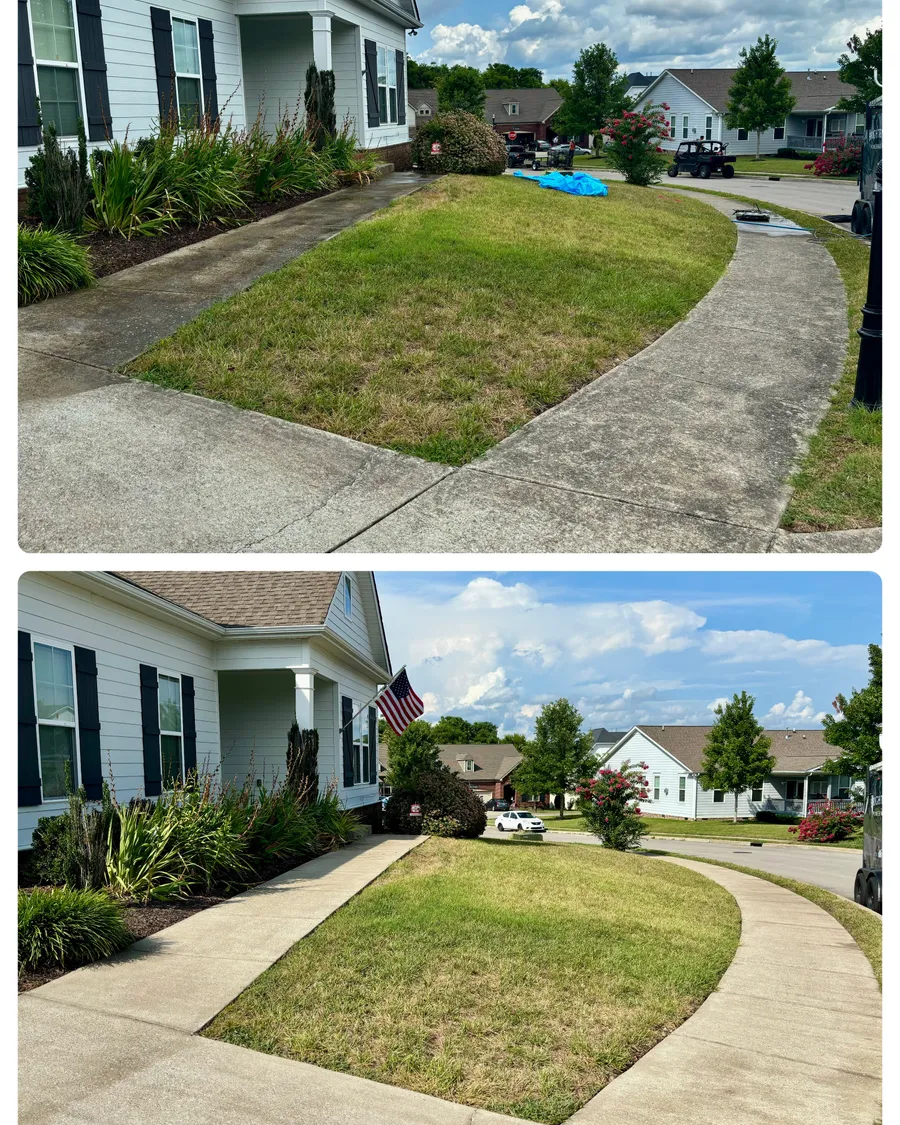
Professional concrete cleaning uses a flat surface cleaner paired with the right pressure and targeted chemistry to handle what Middle Tennessee throws at concrete: iron-rich clay, humidity-fed algae, freeze-thaw wear, and everyday rust and oil.
A flat surface cleaner attachment gives consistent results edge to edge, without streaking.
Targeted chemistry lifts iron-rich clay staining that a garden hose can't touch.
Cleaning first means any follow-on sealing bonds properly and lasts longer.
The plan
Walk the surface and identify stains
Pre-treat and protect surrounding areas
Surface-clean for uniform, swirl-free results
Rinse, inspect, and walk it with you
FAQ
No — concrete is durable enough for higher-pressure cleaning, unlike siding or roofing. We use a surface cleaner attachment for even results without streaking.
Sealing right after cleaning protects the surface and makes the next cleaning easier — see our concrete sealing service.
04 — Concrete Sealing
We seal after cleaning so Tennessee clay, oil, and freeze-thaw can't take hold again.
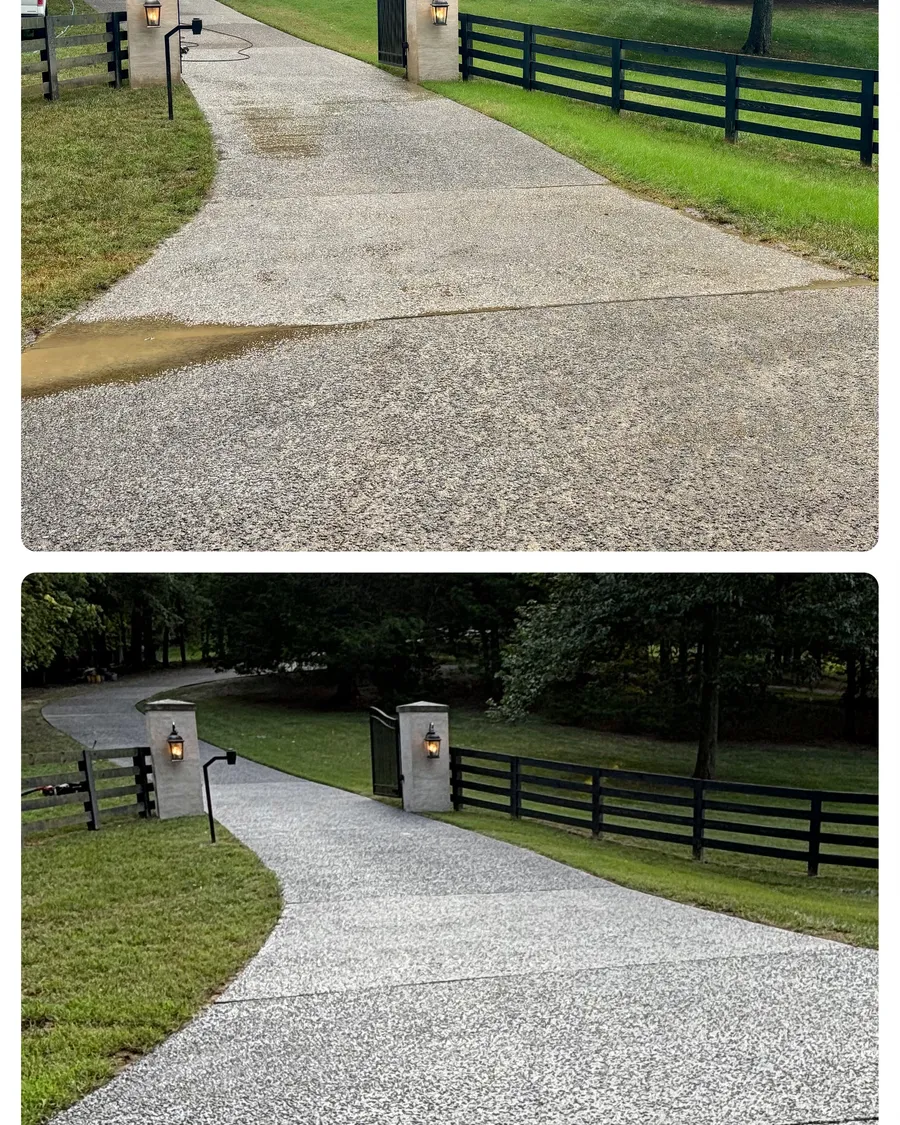
Middle Tennessee's red clay is iron-oxide rich and bonds aggressively into unsealed concrete pores. Humid summers feed mildew, and winters bring repeated freeze-thaw cycles. Sealing is the protective step after cleaning — it lifts existing stains first, dries fully, then applies a sealant that either soaks in or films over the surface.
Sealed concrete resists staining instead of absorbing it.
Sealant protects against winter cracking and surface damage.
Stains wipe off instead of setting in, extending time between deep cleans.
The plan
Clean and treat the surface first
Let it dry fully
Choose the right sealant — penetrating vs. film-forming
Apply evenly and clean up
Set your reseal reminder — every 2–3 years
FAQ
Typically 2–3 years depending on sealer type and traffic/weather exposure — we'll set a reseal reminder with you.
It depends on the look and protection level you want — we'll walk through the options for your specific concrete when we quote the job.
05 — Window Cleaning
Inside and out, glass to sills, with a tidy site and an on-time arrival you can plan your day around.
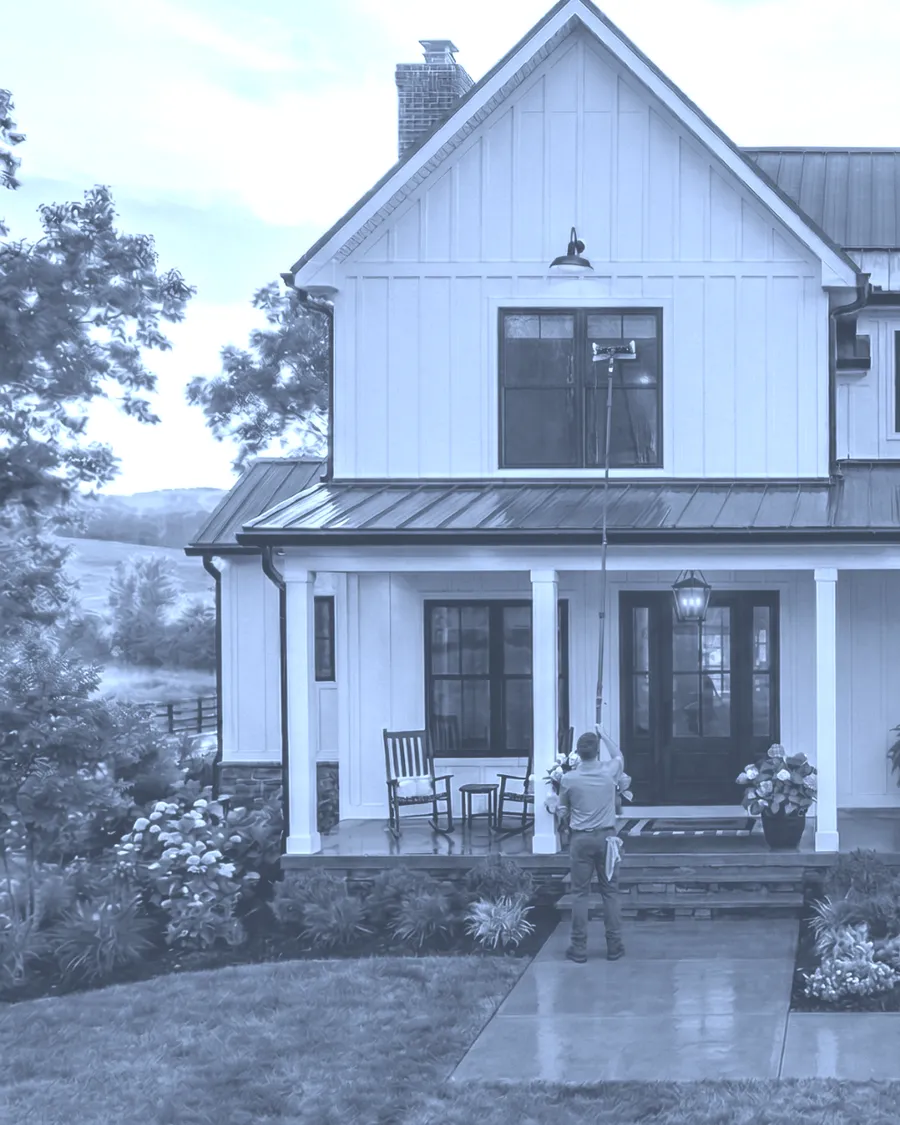
We use purified water and squeegee technique to remove pollen film and hard-water spots from interior and exterior glass, screens, tracks, and sills. Cedar and oak pollen coats glass from February into May, humidity feeds haze on shaded north-facing panes, and mineral-heavy spray from sprinklers and hoses dries into spots — all of it comes off.
A spot-free rinse means no mineral streaking left behind to dry.
The whole window system gets attention, not just the pane.
Bundle for a full-exterior refresh in one visit.
The plan
Walk the home and set expectations
Protect the space around each window
Clean glass, frames, tracks, and screens
Purified-water rinse for a spot-free finish
Final pass and walkthrough
FAQ
Yes — inside and out.
Shaded, humid conditions hold pollen film and moisture longer on north-facing glass, which is why those panes need attention most often.
06 — Gutter Cleaning
Clogs cleared and that black tiger-stripe oxidation scrubbed off the gutter faces.
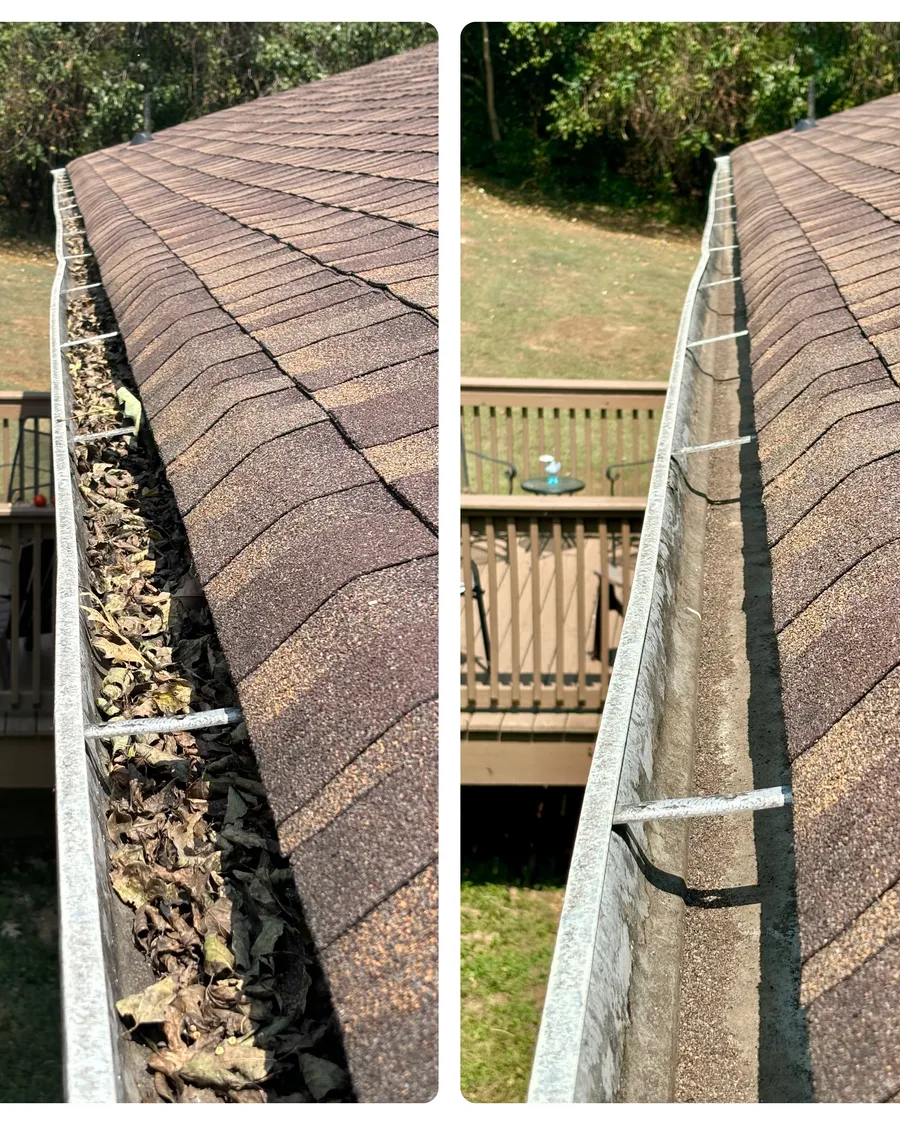
Gutter cleaning removes leaves, pine needles, seed pods, and grit from a home's gutters and downspouts so storm water drains away from the roof, fascia, and foundation. In Middle Tennessee's heavy tree canopy it's best done twice a year — late spring after pollen and seed drop, and again in late fall after the leaves come down.
Cleared downspouts mean water goes where it's supposed to during a storm.
We scrub the black oxidation streaks off the gutter faces, not just clear the inside.
Overflow damage is far more expensive than the cleaning would've been.
The plan
Walk and assess
Clear by hand and bag the debris
Flush downspouts and test the flow
Brighten the gutter face
Clean up and confirm
FAQ
Twice a year for most homes in Middle Tennessee's tree canopy — late spring after pollen/seed drop, and late fall after leaves come down.
We flush and test every downspout as part of the service — a clogged downspout defeats the purpose of clearing the gutter above it.
07 — Christmas Lights
Custom holiday lighting designed, installed, maintained, and taken down by SUNDOG — so your home glows from Thanksgiving to New Year's without you ever touching a ladder.

A full-service holiday lighting program: a designer plans your display, a crew installs professional-grade lights and clips on your roofline, trees, and columns, returns mid-season if anything needs attention, then removes everything in January and stores it for next year.
We handle install, maintenance, and takedown start to finish.
A property walk-through and architectural planning, not a generic strand count.
If weather or equipment causes an issue, we come back.
The plan
Design consultation — property walk-through and architectural planning
Professional install — matched clips and timer setup
Mid-season maintenance — service calls for weather or equipment issues
January takedown — careful removal of all components
Off-season storage — ready for next year's installation
FAQ
Yes. Each holiday season we design, install, maintain, and take down professional-grade Christmas lighting so you get a beautiful display without the ladder. Spots fill up fast, so book early in the fall.
We return for mid-season maintenance if weather or equipment causes an issue — it's included in the program.
Free, no obligation — most homeowners get a ballpark number in under a minute.
Franklin · Brentwood · College Grove


